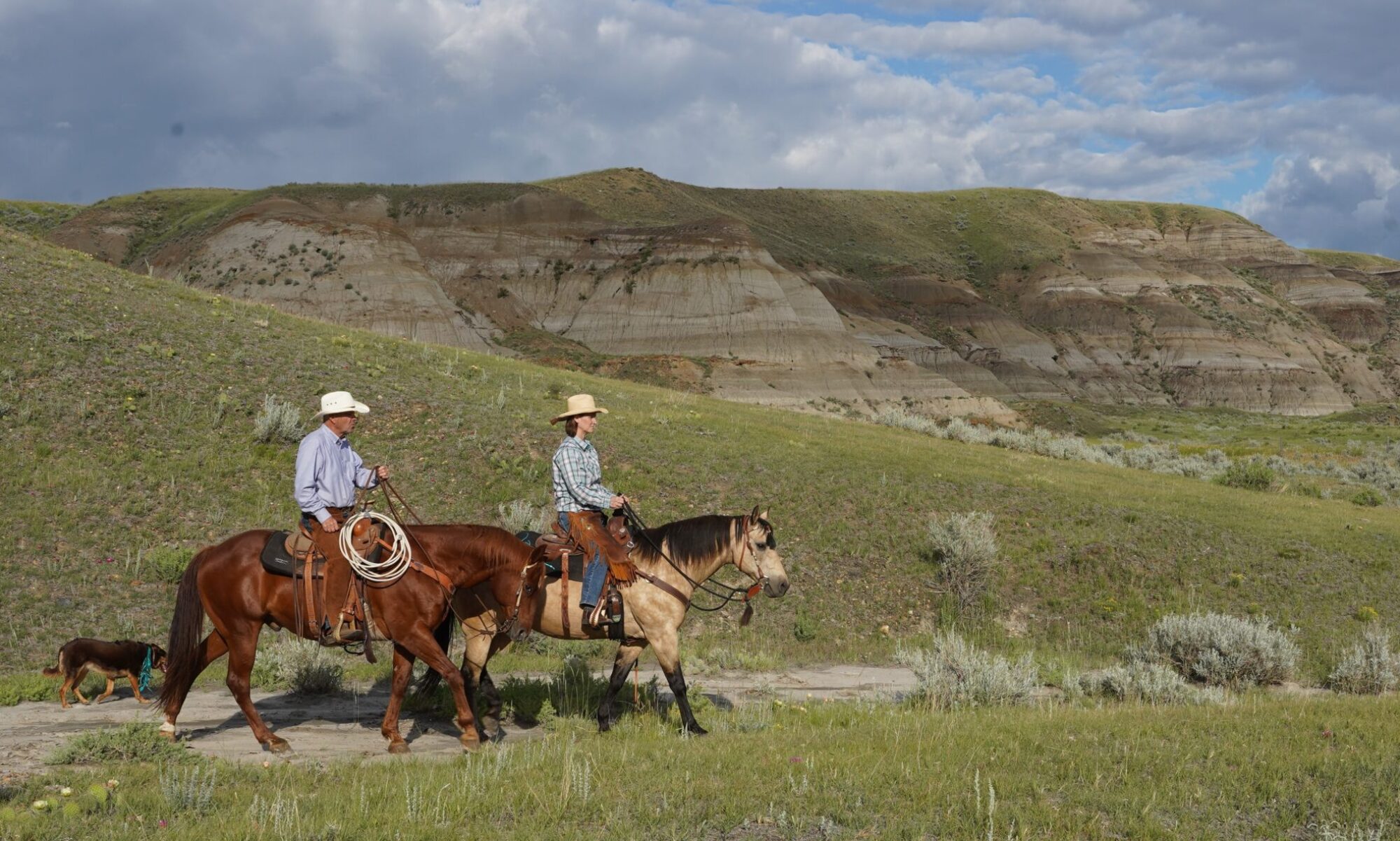
Jim Burk – An Author Among Us
Born in 1941, Jim was raised on a small farm at James River Bridge, Alberta near the town of Sundre. He has an early memory of being lifted onto his dad’s riding horse; into his dad’s saddle, and being sent off to school two and a half miles away.
Jim contracted rheumatic fever in the Fall of 1951 when he was in Grade Four. It was two years of hospital and mainly bed rest. Those two years gave him the opportunity to feed his love of reading; basically read every book in the Sundre Town Library. But he was left with a damaged aorta valve (a leaky heart valve). According to the doctor, a life of manual labour was not to be.
Jim was now well enough to start riding horseback to school again. But the after-effects were quite severe and the usual chores common to a small farm boy were left to his two younger brothers. One thing he could do though was ride horses; and the litte farm always meant there were horses being prepared for sale, and that became one of Jim’s chores.
When he was twelve, his dad gifted him with a two-year-old Appaloosa mare for him to train. He helped halter-break and gentle her as a yearling. He even rode her a little as a two-year old and began training her as a three-year old. He focused quite a bit on gymkhana events such as barrel-racing and pole-bending. She was easy to train and Jim’s dad taught him how to get the best from a horse.
When he was 14, he entered Gypsy in a National Appaloosa Gymkhana event. He committed the usual crime of a novice. He was nervous and ran her through all the moves she was expected to take during competition. She got all hot and bothered. During the barrel-race, she swapped ends in the middle of the first straightaway and ruined her time. Even so, the mare won bragging rights to being the third high point Appaloosa gymnkhana horse in Canada.
But that same fall, with no high school near James River Bridge, Jim was off to boarding school at Prairie High School in Three Hills, Alberta. He spent seven years there, four in high school and three in Bible school.
As for avoiding manual labour, that was not to be. The James River Farm offered no extra cash for higher education, so Jim started working away from home during his twelfth-grade summer. Each summer involved manual labour. First on a large farm at Milo, Alberta, then two summers building fences; primarily pounding posts into the ground with an eight-pound sledge. Then things got easier. He got a summer job as a Park Guide at Radium Hot Springs in Jasper National Park working with his father. There he rented out horses for tourists and guided horseback day trips into back-country in some of the most beautiful country in Canada. In the fall, he pony-wrangled for a big-game outfitter. This back-to-back employment lasted for two summers and autumns.
After that, each summer meant scrambling for employment. He worked at a sawmill in the BC interior; a carpenter’s helper near Fort St. James, BC, and as a bricklayer’s helper and even a brief stint as a bulldozer operator.
Those summer jobs are among his best memories. From there his life became one of books, research and educational technology. University led him to a B.Sc with a major in Zoology, and a B.Ed with a major in Engish (remember his love of reading). This was followed by an M.Ed with a major in Educational Technology. Much of this education happened during summers and during regular employment.
He married Geneva and they had two children, Jill and Jay.
The specialty in Educational Technology led to two years employment with the Alberta Department of Education in the Curriculum Branch; thirteen years with the Extension Department of Saskatchewan Agriculture and twelve years with the Saskatchewan Institute of Applied Science and Technology. After that came early retirement and a decision to retool some of the expertise gained while producing learning materials. He followed his heart into the task of fiction writing. He started out with the view of writing a novel having a beginning, middle and end. The genre, historical fiction. You can see the list below.
As a final note, at age 84, there are still two things on his bucket list (1) finish the last novel in the Stonechild Series and (2) swing his leg over a saddle. (Swing or whatever is necessary.) After all, it’s forty years since last accomplished.
Unless otherwise indicated, you can search for the following titles on Amazon.ca using the
author’s name: Jim Burk.
List of completed titles:
- Stonechild’s Enigma
- Stone child: Emperor’s Messenger
- Stonechild in Abyssinia
- Stonechild and Mamluk Treaure
- Haifa
List of titles in progress
- Traitor
- Stonchild’s Glider Drop
- List of Additional Stonechild Chronicles
- Horses, Trails and Trophies (author – Del Burk)
- A Different Manger (author – James E Burk)
- Adventures of Ember and Belle (author – Jim Burk, a children’s novel, especially good just before Christmas)
A Boy and His Appaloosa by Jim Burk
Jim Burk was raised on a mixed farm where his dad, Delos Burk, always said they were horse-poor with lots of horses providing little income. When Jim’s dad came in contact with Jim Wyatt, a rancher near High River who had begun breeding Appaloosas, he arranged to have a strawberry roan mare bred to one of Wyatt’s stallions. The result was a G1, a Generation One Appaloosa.
Learning about Appaloosas and their near extinction was food for Jim’s imagination. Still recovering from rheumatic fever, and a little weak for normal farm chores, he was given the task of exercising horses to prepare them for selling. His father presented Gypsy to Jim as a two-year old. At the age of twelve Jim was an experienced rider. He rode two and a half miles to school beginning with grade one and rode unsupervised when he felt like exploring. And this being bush country gave much to explore.
As a result of having riding as his main contribution to the farm, Jim had a lot of time to work with Gypsy. Also, good advice from his father, an excellent horseman and horse trainer whose mantra was: “If you’re training a horse and it bucks, that’s your fault.”
Gymkhanas were popular at the time with a variety of races involved. Gypsy was particularly good at barrel racing and pole bending.
When Jim Wyatt had the first National Appaloosa Gymkhana event at his ranch, Jim’s Dad urged him to enter. So he did.
The horse was ready. Jim wasn’t and did what most novices do. He ran Gypsy through all the motions necessary for each event over and over again. As a result Gypsy had worked up a sweat and a load of confusion before the first race, which was barrel racing. She swapped ends in the middle of the first dash and still placed third.
At the end of the day Gypsy was the third high point Appaloosa Gymkhana Horse in Canada. She worked against horses from as far away as Ontario. However, while some of Gypsy’s opposition had prosperous owners, most of the other riders were not necessarily good horsemen. In any case, Gypsy earned Jim some bragging rights.
Jim was fourteen at the time and just finished grade eight. With no high school in the vicinity, that summer spelled the end of his time with a horse that had almost become part of him. Not to mention the fact that she was sold. In the end Jim’s dad had to ask for his gift back. If sold, the money gained would pay for an electric pump that would bring cold running water into his mother’s kitchen. Sad, but gladly given. Best part. Jim was away when Gypsy left the farm.
